

Education
Leasing 101
There’s a lot of misinformation out there about leasing. This page breaks down how it actually works — in plain language — so you can decide if it makes sense for you.
Why Is the Payment Lower on a Lease?
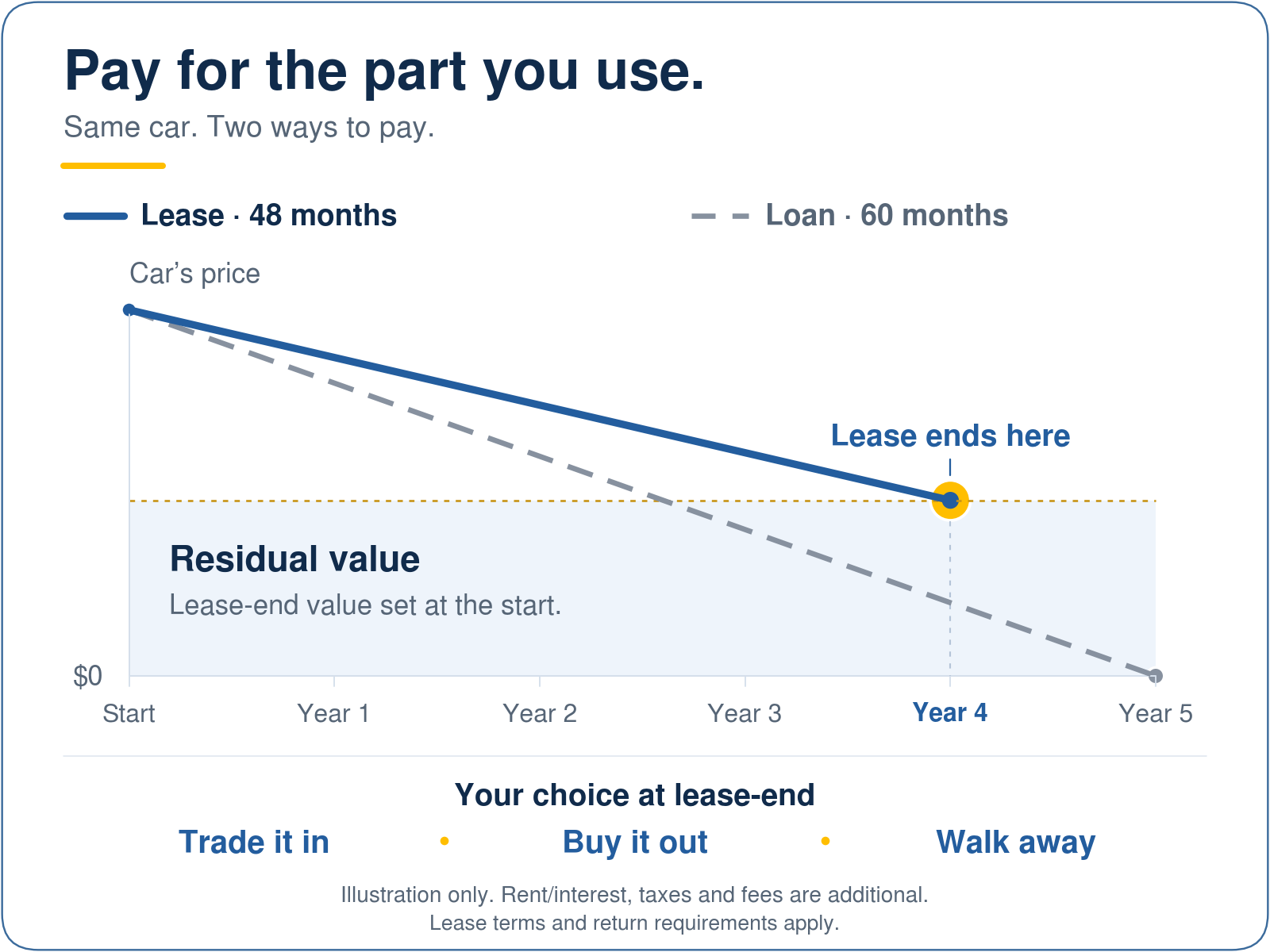
The payment is lower on a lease versus a loan for one simple reason — you’re not paying the car down to zero. You’re paying it down to a residual value — the guaranteed future value of the vehicle. Banks do the math on what your car will be worth at the end of the term — the model, your miles, how long you keep it. You pay the difference between that number and what the car costs today. Nothing more.
Video: How a Lease Works — In 3 Minutes
What Happens When Your Lease Ends?
This is the question everyone asks — and the answer is simpler than most people think. You have three options. Always. The key takeaway: A lease doesn’t take options away from you — it gives you more. You can own the car, trade the car, or walk away from the car. In a traditional loan, your only real option is to sell it or trade it and hope the numbers work out. In a lease, the numbers are predetermined from day one.
Trade It In
A lot of people think you lose the ability to capture equity if you’re in a lease. Although some leases on the market don’t allow this, the D&M EZ Lease does. If you pay your car down to a $20,000 residual and the vehicle ends up being worth $25,000, you keep that $5,000 in positive equity — your D&M agent trades you out and applies it to your next deal. You get all of the same upside as you would in a purchase.
Walk Away
You can also pay the disposition fee, turn the car in, and walk away. The vehicle is inspected for normal wear and tear, and they verify your mileage is within the parameters you set up in your lease. After that, the bank is on the hook for the future value — not you.
Buy It Out
Love the car? Keep it. The residual value is the part of the car you haven’t paid for through your monthly payments. Pay that amount and the car is yours. If you’re not sure whether you want to keep it long-term, a lease lets you drive it for the full term and then decide — you don’t have to commit upfront. This is your option, and you should be able to buy it for the residual value.
“Leasing isn’t for me — I like to own my cars.”
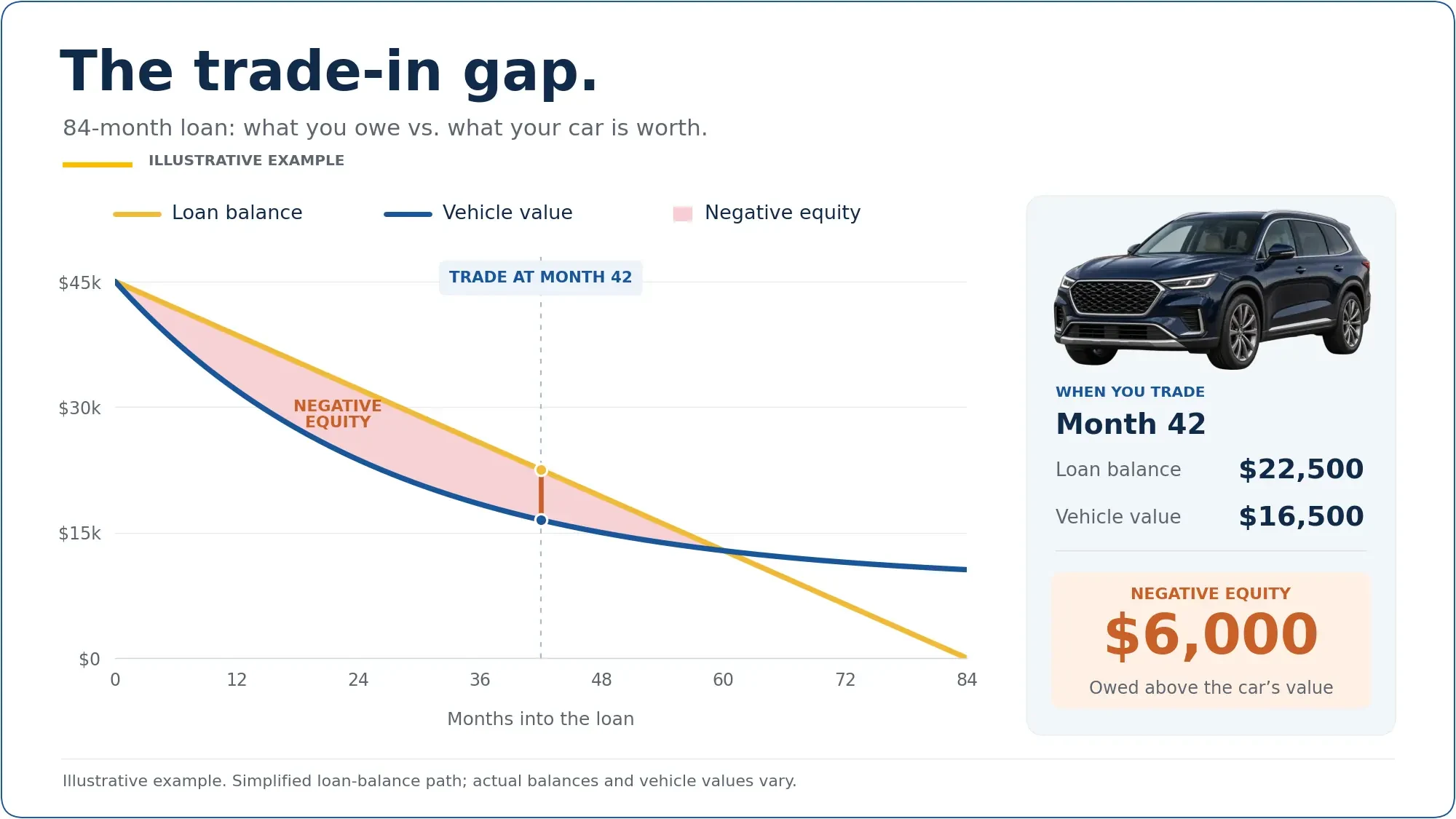
Says the guy in an 84-month loan, who trades midway into the loan and finds out he’s $12,000 upside down. Don’t fall for the negative equity trap. Unless You Have the Title, You Don’t Own It — It’s About Paying Smarter. You’re driving the same car. You’re making a monthly payment. The only difference is you’re not committing longer and taking responsibility for the future value. The bank guarantees the residual value and takes on that risk — not you.
High/Low Miles — We Match the Lease to You
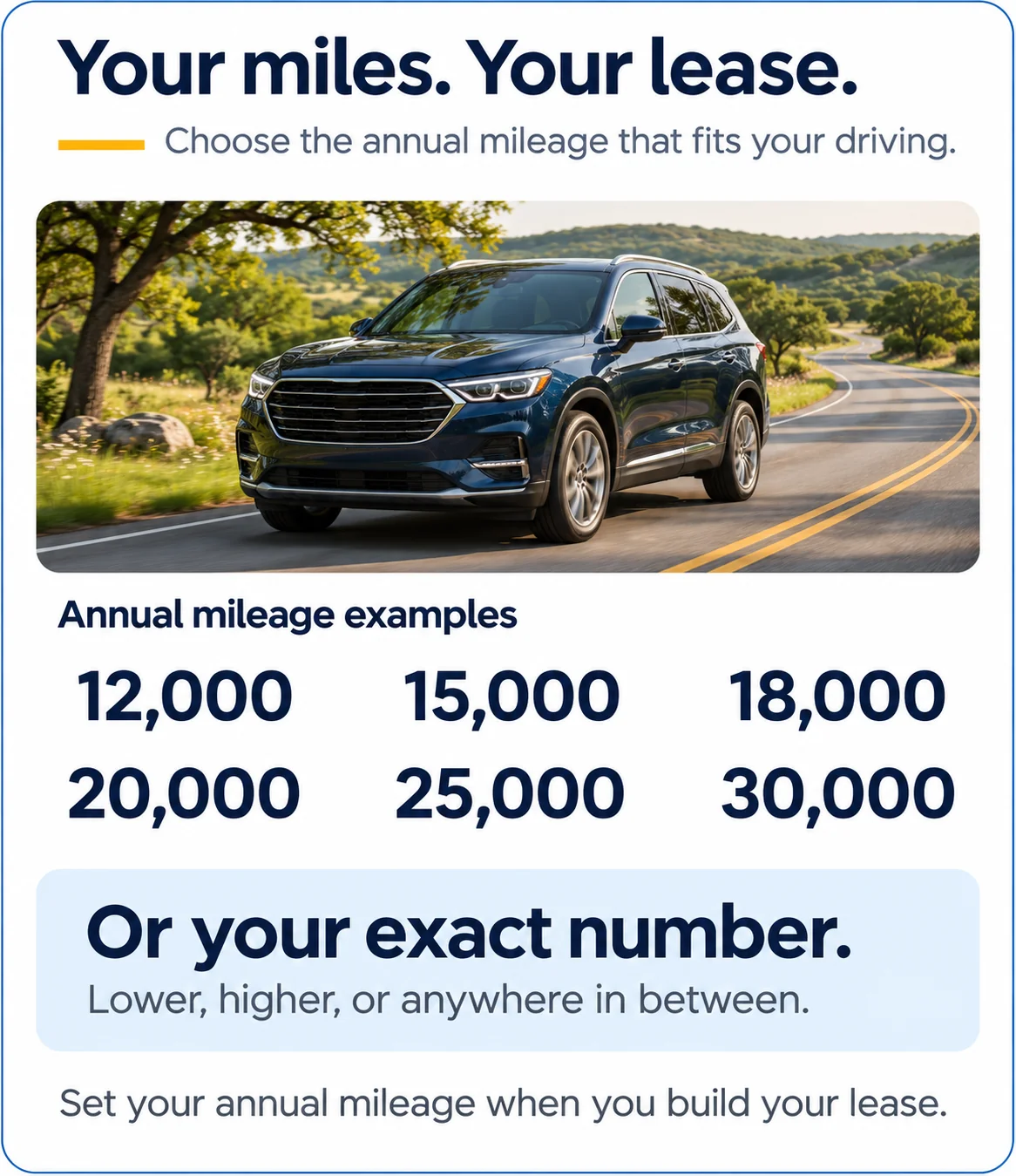
The average consumer in Texas drives roughly 15,000 miles per year. At D&M, we customize the mileage in your lease to match however much you actually drive. No one should be driving around worried about going over on their miles. If you set it up right from the beginning, it’s a non-issue. No matter how much you drive, there’s a lease that fits. One size doesn’t fit all — especially when it comes to how you use your cars.
- Written at Your Number: Whatever you set, that is what we build. The payment is structured around it from day one — no guessing, no surprise at the end.
- No Manufacturer Caps: Some lenders stop at 10,000 or 12,000 miles a year. The D&M EZ Lease has no such limit — high-mileage drivers included.
- 5,000 Miles of Forgiveness: Drove a little more than you expected? If you go to the end of the term, the EZ Lease includes 5,000 miles of mileage forgiveness built in.
The Mileage Bottom Line
Tell your agent how much you drive. They build the lease around that number. And if you end up driving a little more than you planned, the EZ Lease carries 5,000 miles of forgiveness at the end of the term. The horror stories you hear about mileage overages almost always come from people who were put in the wrong mileage structure to begin with.
The Lease Difference
You only pay for the part of the car you use. That’s why the payment is lower.
Term Customization — Not Just 36 Months
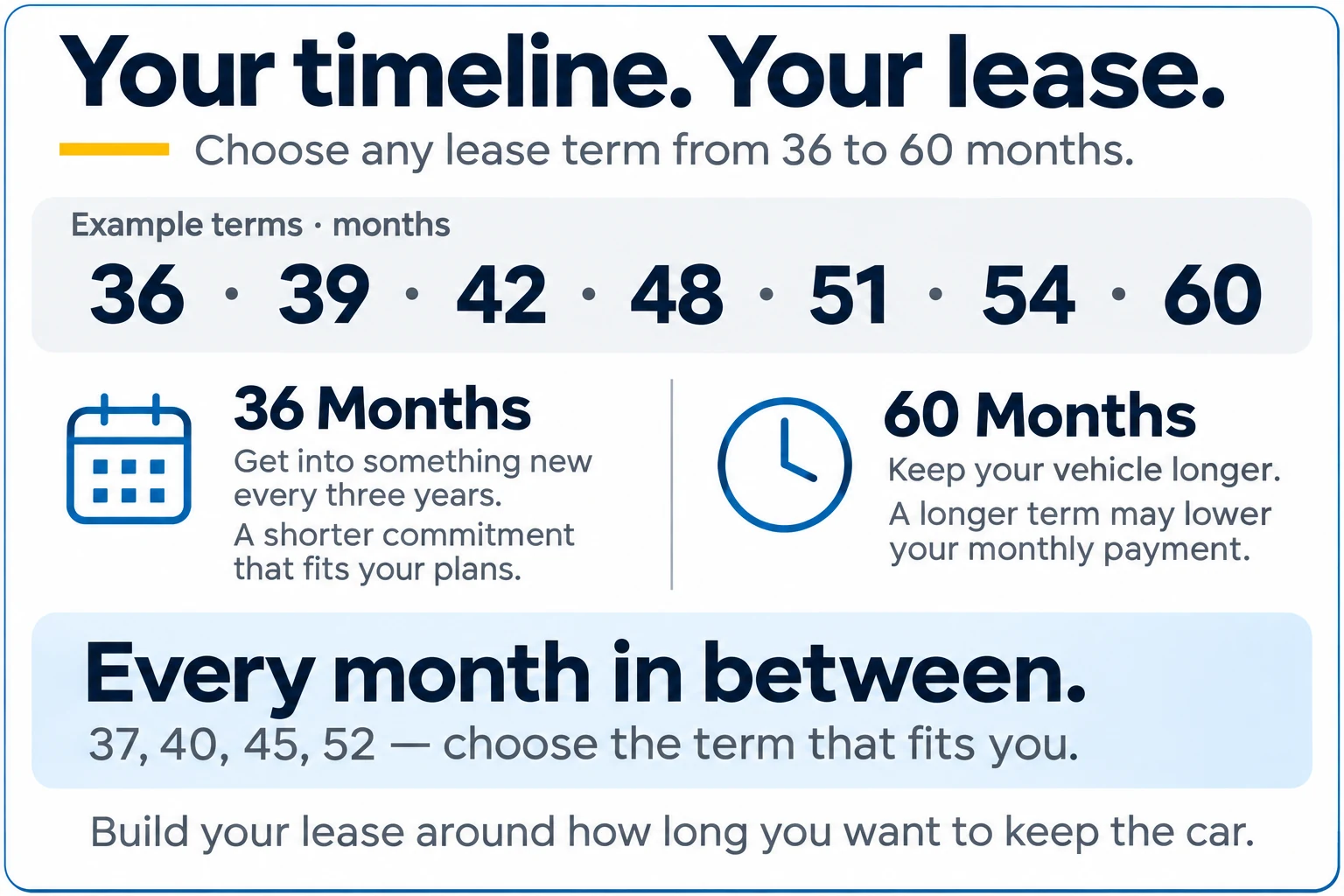
Most funders advertise 36 months and nothing else. There’s a reason for that — they want you back in the market every 3 years so they can sell you another car. It works great for them. It doesn’t always work great for you. At D&M, we build leases anywhere from 36 months to 60 months — and everywhere in between. The term should be based on how long you actually want to keep the car, not what’s convenient for the bank.
D&M’s Flexible Leasing
The right term is the one that matches how you actually use cars. If you like something new every 3 years, a 36-month lease makes sense. If you tend to keep cars for 4-5 years, a longer term gives you a lower payment without forcing you into the market before you’re ready. There’s no single right answer — it depends on you.

Why Buy a Car You’re Never Going to Keep?
Leasing isn’t for everyone. But when’s the last time you saw a Texas title? A traditional auto loan finances the full price of a car — you say you’ll pay it all the way down to $0 over 5-6 years, but most never do. The car depreciates faster than you pay it down, and if you trade before it’s paid off, you owe more than it’s worth. That deficit gets rolled into your next loan, your payment goes up, and the cycle repeats. The smart money leases — so you’re not tying up extra cash in a depreciating asset. If you haven’t paid off a car lately, let’s run the math on what leasing would look like for you.
Leasing Terms You Should Know
Leasing uses some different terminology than a traditional loan, and understanding what those terms actually mean can make the process much easier to navigate. Here are the key terms you’ll encounter throughout a lease, what they mean in plain English, and how they affect what you pay, what you owe, and what options you have at the end of the lease.
Residual Value
The guaranteed future value that you’re paying the car down to. This is what the bank guarantees the car is worth at the end of the lease. It’s set at the beginning and doesn’t change. The residual is the bank’s risk — not yours.
Depreciation
Another word for principal in a lease. It’s the difference between the vehicle’s price and the residual value — the portion of the car’s value you’re actually paying for. On a $60,000 car with a $22,000 residual, the depreciation is $38,000.
Net Capitalized Cost
The total amount financed after your cap cost reduction has been applied. Think of this like the total amount financed in a normal retail installment contract — it’s the starting number that includes the price of the car, tax, title and license, acquisition fee, gap insurance, any negative equity you may have rolled in, and so on.
Cap Cost Reduction
Anything that reduces the capitalized cost of the vehicle before the lease is calculated. This includes cash down, positive trade equity, and manufacturer rebates. The more you reduce the cap cost, the lower your monthly payment.
Money Factor
Leases are calculated using money factors instead of interest rates. To convert a money factor to an interest rate, multiply it by 2,400. For example, a money factor of .00250 equals a 6.0% interest rate (.00250 × 2,400 = 6.0%).
Rent Charge
The total interest in a lease contract. This is the cost of borrowing the money over the life of the lease — the same concept as total interest paid on a traditional auto loan, just labeled differently.
Keep Learning

EZ Lease
Built over 50 years of listening to what real customers actually need. The EZ Lease gives you protections and flexibility that no traditional lease can match.

How it Works
The entire experience is designed to save you time and money. No hours spent driving around and haggling. No being passed between multiple people. One agent handles everything, and you never have to leave your home or office.

Lease vs Buy
What’s the difference between leasing and buying a car? Let D&M Auto Leasing help simplify this difficult process by examining the pros and cons of car leasing and buying. As new vehicle prices continue to increase, many clients are opting for longer and longer finance terms and therefore rarely realize ownership. Leasing offers lower monthly…
Ready to Get Started?
Get Your Quote
See personalized lease options tailored to your budget, preferences, and lifestyle. There’s no obligation or high pressure, just a simpler way to find your next vehicle.
